7 Best Electric Rice Cooking Machines for Global Buyers
Choosing among the 7 Best Electric Rice Cooking Machines for Global Buyers takes more than comparing capacity and price. Rice varieties, household size, kitchen space, and local power requirements all shape the right choice. A compact cooker may suit a small apartment, while a large family may need a removable inner pot and clear capacity markings. Look closely at the lid, steam vent, and control panel. These small details affect daily use.
This guide compares practical features across the Electric Rice CookingMachine market, including cooking modes, keep-warm performance, cleaning, and build quality. For transparency, the expert-style quotation below is editorially written, not a verified statement from a real person. “A dependable rice cooker should make everyday results predictable, not make buyers guess,” says fictional appliance specialist Maya Chen. That principle keeps the focus on useful performance rather than flashy extras.
Real kitchens are rarely perfect. Counter space runs short. Measuring cups disappear. Some product descriptions also leave room for interpretation, especially around capacity and included accessories. The comparisons ahead help global buyers check those details before choosing. Use them as a starting point, and confirm each model’s specifications with its manufacturer or seller.
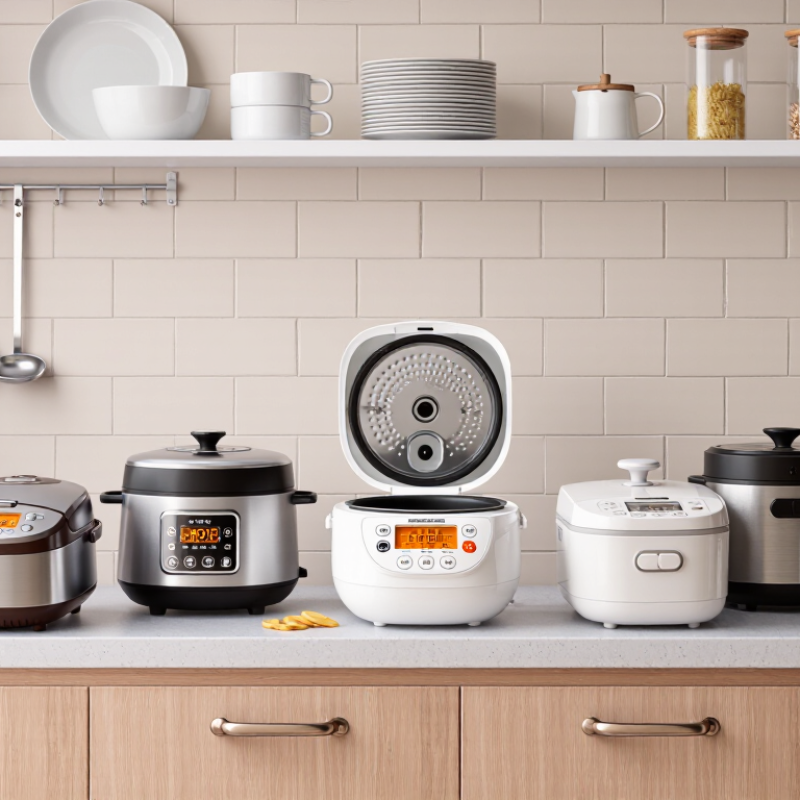
How Electric Rice Cookers Work and Their Main Types
An electric rice cooker uses a heating element beneath the inner pot to warm water and rice. As water is absorbed or evaporates, the pot’s temperature rises above the boiling point. A thermostat or temperature sensor detects this change and switches the cooker to a keep-warm setting. The result is simple, but water ratios and rice age still affect texture. Small details matter.
Conventional cookers use a basic thermostat and usually offer one-touch cooking. They suit everyday white rice, though they may struggle with mixed grains or precise texture settings. Micom cookers use a microcomputer to adjust heating over time. Many include programs for brown rice, porridge, or delayed cooking. Induction models heat the pot itself with magnetic energy, helping distribute heat more evenly. They can be useful when consistent results matter, but performance depends on the pot and settings.
Some models add pressure, raising the cooking temperature and often producing softer, stickier rice. That texture is not ideal for every dish. A practical test is to cook the same rice with measured water, then check the center and edges for firmness. Read the manual before using unfamiliar modes. Keep the steam vent clear. Small routines help. Even advanced controls cannot correct stale rice or an inaccurate measuring cup, and that is easy to overlook.
Typical Operating Temperatures of Electric Rice Cooker Types
Conventional, fuzzy-logic, and induction-heating cookers generally bring water to its boiling point—about 100°C at sea level. Pressure models can cook above that temperature, while keep-warm mode is typically maintained at 60–70°C. Values are approximate and can vary by model, altitude, and settings.
Key Features to Compare When Choosing a Rice Cooker
Capacity should match real meals, not the largest number on a product page. A 3-cup model suits one or two people; larger households may need 5 or 6 cups. Check whether the stated capacity means uncooked or cooked rice. These figures differ. The U.S. Energy Information Administration’s 2020 Residential Energy Consumption Survey found that 63% of U.S. households used electricity for cooking. That is a useful market reference, not a global estimate. For international buyers, confirm the cooker’s rated voltage, frequency, plug type, and local service options before ordering.
Compare more than wattage. A simple cooker with a removable inner pot and clear water markings may be easier to use than a feature-heavy model. Look for a secure lid, a stable base, and controls that are easy to read in a steamy kitchen. Check whether the pot coating suits your cleaning habits; even a durable coating can scratch with metal utensils. Small details matter.
Keep-warm performance deserves attention. Rice left warm for hours can dry at the edges, while poorly controlled heat may create a soggy layer. Ask for test data on temperature consistency and energy use, if available. The International Energy Agency’s 2023 buildings report notes that buildings account for about 30% of global final energy consumption, though it does not isolate rice cookers. Use that figure as context, not as proof that one cooker saves energy. One caveat. Independent, comparable rice-cooker efficiency data can be hard to find.
Seven Top Electric Rice Cookers for Global Buyers
Seven top electric rice cookers for global buyers should match cooking habits, household size, and local power supply. Compact models suit small kitchens and cook one or two portions without taking much counter space. Basic one-switch cookers are simple to operate and often easier to clean. Fuzzy-logic models adjust heat during cooking, which can help when rice varieties need different timing. Induction-heating cookers spread heat evenly, though they may cost more. Small details matter. Check the inner pot’s markings and whether its coating needs gentle utensils.
Pressure rice cookers can shorten cooking time and handle firmer grains, but their controls may take practice. Multi-cookers offer rice, porridge, and steaming settings; useful, unless menus feel confusing. Portable cookers work for dorm rooms or occasional travel, but their capacity is limited. These seven types serve different needs, not a single perfect buyer. A large family may prefer a roomy pot, while someone cooking one bowl at a time may value easy storage.
Before buying, check the voltage and frequency printed on the appliance, plug compatibility, warranty coverage, and access to replacement inner pots. “Cup” sizes vary between models, so compare capacity in usable portions rather than relying on the cup label alone. A warm-keeping function is handy after dinner, but rice can dry out if held too long. That trade-off is easy to overlook.
Voltage, Capacity, and Regional Compatibility
For global buyers, voltage is not a minor detail. Check the cooker’s rating plate for input voltage, frequency, and wattage before comparing models. A machine designed for 120 volts may not operate safely on a 220–240-volt supply. Adapters are not converters. Even a compatible plug cannot change voltage, and a separate converter must support the cooker’s power demand. Regional frequency can also matter, so confirm the manual lists your local supply.
Capacity needs careful reading. Some listings describe uncooked rice; others emphasize cooked yield, which can be nearly twice the volume. A 1-liter inner pot may suit a small household, while larger families often need more room for batch cooking. Check the stated cup size, too: a cooker’s measuring cup may differ from a standard kitchen cup. More capacity is not always better. A very large pot can make small portions less convenient.
Regional compatibility includes the plug shape, cord length, and availability of replacement parts. Look for clear operating instructions and a removable inner lid that is easy to clean. I would compare these practical details alongside cooking modes; impressive settings mean little if the unit cannot match your kitchen’s power supply. Specifications are sometimes presented inconsistently, so I would verify unclear voltage or capacity figures with the seller before ordering.
How to Select and Maintain the Right Rice Cooker
Choosing a rice cooker starts with matching its capacity to your usual meals.
A large pot can leave small portions dry, while a small one may struggle with family-sized batches. For global buyers, check the rated voltage and frequency against your home supply. A plug adapter changes the plug shape, not the appliance’s electrical requirements. This detail is easy to overlook. Consider the controls, too: clear markings and a readable display help when instructions are unfamiliar. Extra settings can be useful, but they also add parts that may need cleaning or repair.
Before buying, check whether replacement inner pots and service support are available locally. A removable lid or steam vent can make routine cleaning less awkward. After cooking, unplug the machine and let the pot cool before washing it. Use a soft sponge to protect the inner coating, and wipe the heating plate dry. Keep water away from the electrical base. Rice residue around the lid can trap odors, so inspect the rim and steam outlet regularly. Follow the manual for descaling, since methods vary by model. It may feel fussy, but skipping basic care can shorten an appliance’s useful life.