How to Replace Your Fridge Crisper Drawer Efficiently?
Replacing your fridge crisper drawer may seem daunting, but it can be done efficiently with a bit of planning. The crisper drawer plays a crucial role in maintaining the freshness of your produce. Over time, these drawers can crack, warp, or simply become too worn to function well.
Fridge Crisper Drawer Replacement is not just about swapping out an old drawer for a new one. It’s important to measure your space accurately and choose a drawer that fits perfectly. Often, people get overwhelmed by options, only to find that their new drawer does not fit as expected.
Moreover, installation can sometimes be tricky. Carefully removing old drawers without damaging the surrounding areas is essential. Take your time. Consider cleaning the fridge interior while you’re at it. This replacement process presents a perfect opportunity for a deep clean. Reflect on the experience—next time, things will likely go smoother.
Choosing the Right Replacement Crisper Drawer for Your Fridge Model
Choosing the right replacement crisper drawer for your fridge model can be tricky. It's not just about fit; it’s about functionality. Different models have various design features. A drawer that works well for one type may not suit another. Measure your current drawer and note the depth, width, and height. This can prevent mistakes and save time.
Consider the materials used in potential replacements. Some drawers are made of plastic, while others may have more durable options. Look for drawers that have easy-slide mechanisms. This can make accessing your fruits and veggies more convenient. Check if the drawer has ventilation holes as well. These features help maintain freshness.
Reflect on what you typically store. If you frequently keep larger items, the size of the drawer matters. A small drawer can limit options. Maybe you've dealt with overflowing produce before. It’s a hassle. Evaluate your usage patterns. A thoughtful choice can enhance your fridge's storage efficacy.
Understanding Crisper Drawer Features and Their Importance for Freshness
The crisper drawer in a refrigerator plays a crucial role in maintaining the freshness of fruits and vegetables. According to a report from the Food Institute, proper storage can extend the shelf life of produce by 50% or more. This is primarily due to the unique humidity control features found in most crisper drawers. Even subtle adjustments to humidity can make a notable difference.
Many crisper drawers incorporate different humidity settings. High humidity is ideal for leafy greens, while low humidity works better for items like apples. Yet, not all crisper drawers provide these features. A study by the American Chemical Society highlighted that improper storage leads to up to 30% food waste in households. Poorly designed or malfunctioning drawers can contribute significantly to this waste.
Understanding your crisper drawer's capabilities allows you to maximize its efficiency. Using it correctly can result in noticeable changes in the longevity of your produce. Still, many users overlook these features. They often hope for freshness without considering drawer settings. This oversight can lead to disappointment. Investing time in understanding your refrigerator can lead to less waste and more savings.
Measuring Your Existing Crisper Drawer for a Perfect Fit
Replacing your fridge crisper drawer can greatly enhance food storage. To ensure a smooth process, accurately measuring your existing drawer is crucial. According to industry reports, a poorly fitting drawer can lead to air leaks and spoilage, significantly reducing the freshness of your produce.
Begin by removing your current crisper drawer. Use a measuring tape to take precise dimensions: length, width, and depth. Most experts recommend measuring at multiple points, as drawers may not be uniform. An average crisper drawer ranges from 14 to 26 inches in width. However, over time, factors like warping can affect size, making careful measurement essential.
Consider the shape and design of the drawer. An ill-fitting drawer can cause items to be squished or improperly ventilated. This can lead to faster deterioration of fruits and vegetables. A report from the Food Institute highlights that improper storage can lead to a 20% increase in food waste. Therefore, a snug fit is essential to maintain food quality, prolong freshness, and minimize waste.
Replacement Options for Fridge Crisper Drawers
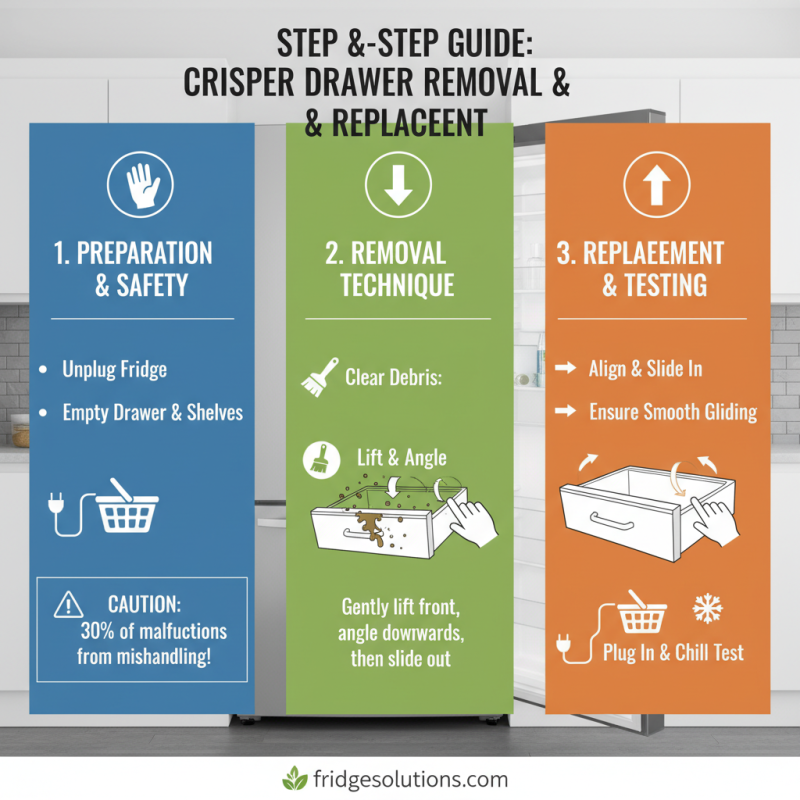
Step-by-Step Guide to Safely Remove and Replace the Crisper Drawer
Replacing your fridge crisper drawer may seem simple, but it often comes with challenges. Many homeowners struggle to remove these drawers safely, usually due to debris build-up or incorrect lifting techniques. According to industry reports, about 30% of reported fridge malfunctions stem from users mishandling internal components like drawers.
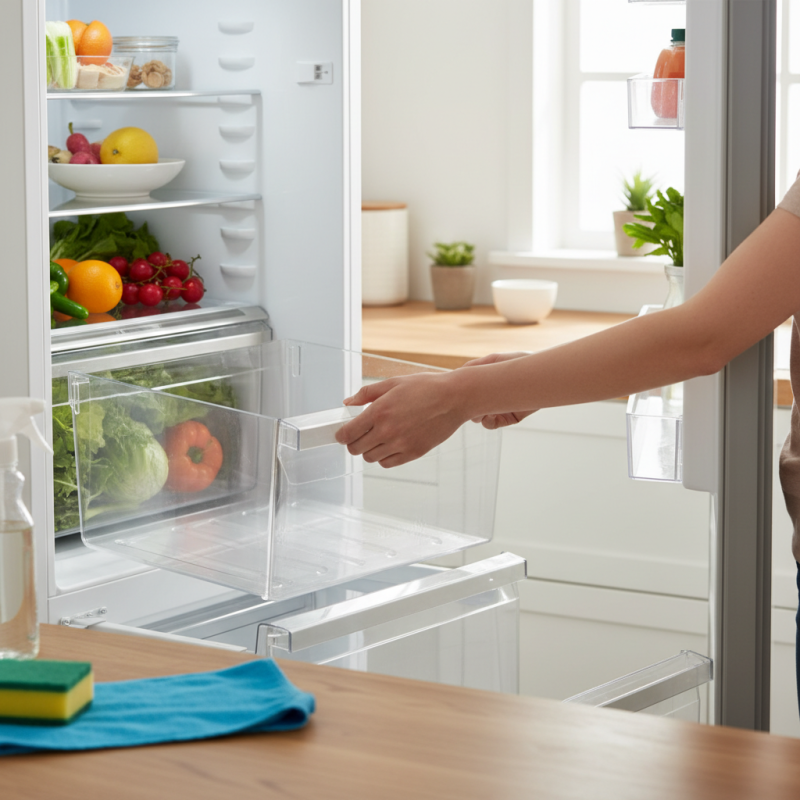
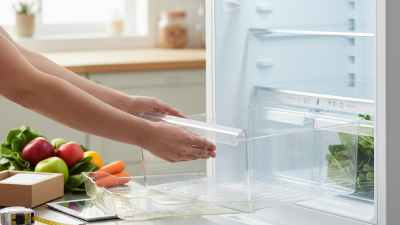
To begin, clear the contents from the crisper drawer. You may need a soft cloth and a gentle cleaner to address any spills or stains inside the fridge. This is often overlooked, yet a clean workspace prevents additional messes. Carefully pull the drawer out while supporting its weight. Remember, a sudden jerk can break the glides or the drawer itself. As reported by appliance experts, improper removal can lead to lasting damage in 15% of cases.
Once out, inspect the new drawer. It's crucial the dimensions match your fridge specifications. Often, users forget to check compatibility, resulting in wasted time and money. Align the new drawer carefully, ensuring it sits properly in the glides. Remember, this process isn't always perfect. It can take multiple tries to get it right. Don't rush it. A little patience can save you a future headache and a potentially costly repair.
Maintenance Tips to Ensure Longevity of Your New Crisper Drawer
Maintaining your new crisper drawer is essential for its longevity. Start by keeping it clean. Use a gentle detergent and warm water to wipe it down. Avoid harsh chemicals. They can degrade the material over time. Regularly check for cracks or wear. A small crack can lead to bigger issues.
Temperature control is also vital. The ideal fridge temperature is between 35°F and 38°F. Keep an eye on it. If it’s too warm, fruits and vegetables spoil faster. If too cold, they may freeze. Store items properly. Place ethylene-producing fruits away from vegetables. This prevents premature ripening.
Every so often, empty the drawer completely. This allows a thorough cleaning and assessment. Don't overlook small spills. They can invite bacteria. Reflect on your storage habits. Are they practical? Adjust as needed to enhance freshness and avoid waste.