Top Stainless Steel Sink Options for 2026 Global Buyers?
In the realm of kitchen essentials, the Stainless Steel Sink stands out as a timeless choice. As we look towards 2026, global buyers face a diverse market landscape. This material offers durability and style, making it favored by many. However, not all stainless steel sinks are equal. Quality varies across brands and models.
Many buyers may feel overwhelmed by the options available. It’s vital to consider factors like gauge, finish, and size. A higher gauge indicates thinner steel, which might dent easily. Meanwhile, a brushed finish can hide scratches better than polished versions. Each detail impacts functionality and aesthetics.
Reflecting on personal experiences can guide choices. Some may regret not prioritizing depth or accessories. Thus, understanding different models can lead to informed decisions. Quality stainless steel sinks enhance kitchen spaces, but the wrong choice can lead to dissatisfaction. It's crucial to explore and select wisely. Consider the balance of price and performance as you navigate the options.
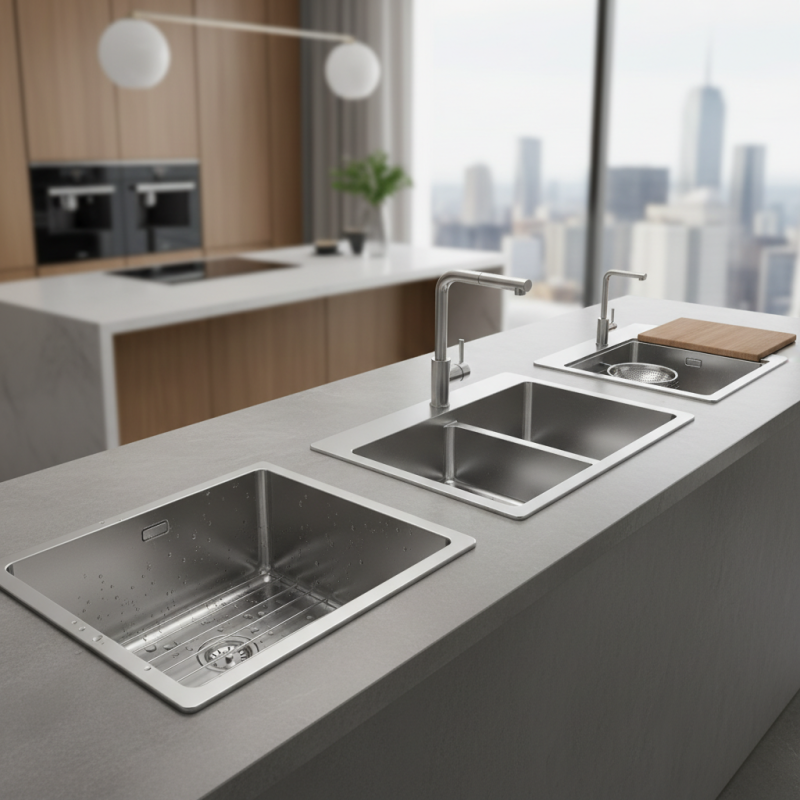
Top Stainless Steel Sink Trends for 2026 Global Market Analysis
As we look ahead to 2026, stainless steel sinks continue to capture the attention of global market buyers. One prominent trend is the rise of eco-friendly materials. Many manufacturers are experimenting with sustainable production techniques. These methods promise to reduce environmental impact. Some sinks will incorporate recycled stainless steel, making them an attractive choice for conscious consumers.
Additionally, customization options are on the rise. Buyers seek unique designs to fit their kitchen aesthetics. This trend offers versatility in size, shape, and finish. Matte and brushed finishes are gaining popularity over shiny surfaces. People want their sinks to serve as statement pieces. However, these trends may also lead to confusion among buyers. With so many choices, selecting the perfect sink can be daunting.
Moreover, technology integration is transforming the market. Some sinks now feature built-in smart technology. These innovations aim to enhance functionality and ease of use. Yet, not all consumers may be comfortable with such advancements. There’s a learning curve associated with high-tech features. This presents an opportunity for ongoing education and support in the industry. Overall, the stainless steel sink market in 2026 will likely be dynamic, reflecting consumer preferences and emerging technologies.
Comparative Overview of Gauge Thickness and Durability in Sinks
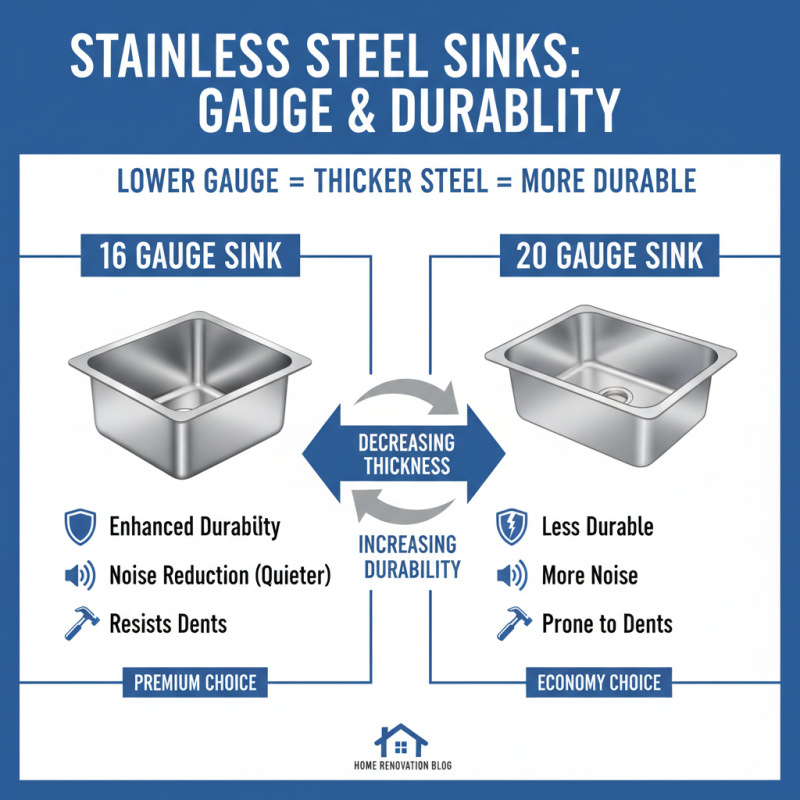
When selecting a stainless steel sink, gauge thickness plays a crucial role in durability. Generally, the lower the gauge, the thicker the metal. For example, a 16-gauge sink is thicker than a 20-gauge. This thickness impacts not only the sink's lifespan but also its noise level and resistance to dents. Thicker sinks tend to absorb sound better and withstand everyday wear.
In 2026, buyers should focus on the material's quality. A high-grade stainless steel, such as 304, enhances durability. It resists corrosion and scratching. However, some might overlook the importance of maintenance. Even with high-quality materials, regular cleaning is essential to prevent stains and stains from settling in. A sink can look great at first but may lose its luster without proper care.
Buyers often assume that the thicker the sink, the better. However, this isn't always true. Some manufacturers use thinner steel and coat it to create an appealing look. These sinks can be deceptive in quality. It's vital to consider the manufacturing process, as it can influence long-term durability. Research and compare options before making a decision.
Eco-Friendly Manufacturing Processes in the Stainless Steel Sink Industry
The stainless steel sink industry is evolving. Manufacturers are increasingly adopting eco-friendly processes in their production methods. These initiatives significantly reduce waste and energy consumption. For example, the use of recycled materials has become a standard practice. This approach not only conserves resources but also cuts down on greenhouse gas emissions.
Many plants are now turning to renewable energy sources like solar and wind. Implementing these technologies creates a lighter carbon footprint. However, challenges remain. Transitioning from traditional methods can be complex and expensive. Companies are also grappling with fluctuating costs of sustainable materials.
Consumer awareness is rising. Buyers are more inclined to seek sustainable products. They value transparency in the production process. Brands that openly share eco-friendly practices are likely to gain an edge. Yet, some businesses might still prioritize profits over sustainability. The balance between quality, cost, and environmental impact continues to spark discussion within the industry.
Consumer Preferences and Buying Behavior in Global Sink Markets
As global buyers look toward 2026, understanding consumer preferences in sink markets has become crucial. Stainless steel sinks are favored for their durability and style. Buyers appreciate options that offer a blend of functionality and aesthetic appeal. The rise in eco-conscious consumers influences buying behavior. Many prefer sinks made from sustainable materials or with water-saving features.
Local demographics also impact choices. Urban buyers often choose sleek designs that fit smaller spaces. In contrast, rural consumers may prioritize large, deep sinks for practicality. It's intriguing to see how trends shift regionally, with some markets leaning toward traditional styles while others embrace modern minimalism.
Price sensitivity remains a significant factor in purchasing decisions. Some consumers are willing to invest more for premium materials, while others seek affordable options. This divide opens discussions on quality versus cost. As designers and manufacturers respond, they must consider the balance between innovation and usability. Understanding these nuances will guide better offerings in the ever-evolving global market.
Innovations in Design and Functionality: The Future of Stainless Steel Sinks
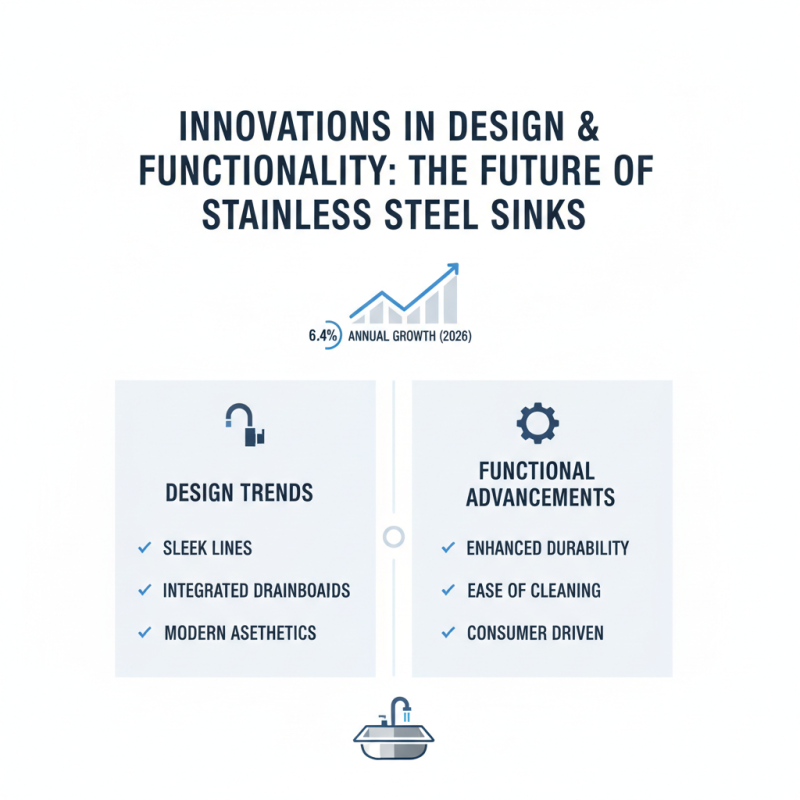
The evolution of stainless steel sinks is marked by innovation in both design and functionality. A recent industry report highlighted that the global stainless steel sink market is projected to grow by 6.4% each year through 2026. This growth is driven by consumer demand for enhanced aesthetics and durability. Designs now incorporate sleek lines and integrated drainboards, catering to modern kitchen needs.
In terms of functionality, advancements like sound-dampening technology have become essential. Many sinks now feature noise-reducing pads that absorb sound, making kitchen work quieter. Additionally, the introduction of innovative finishes, such as fingerprint-resistant coatings, enhances maintenance while preserving the sink's appearance. This is a response to consumer feedback, indicating a desire for low-maintenance solutions.
However, challenges remain. Some stainless steel sinks still exhibit scratching and denting, which can be frustrating for users. Consumers are becoming aware that not all thicker gauges guarantee better quality. Therefore, buyers must consider crafting methods and material sources carefully. As designs continue to evolve, the importance of addressing these imperfections will remain pivotal for industry stakeholders.