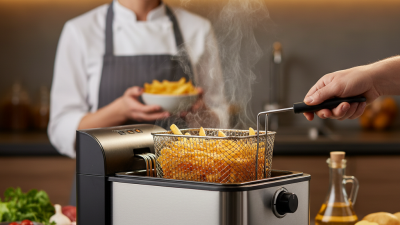
Choosing the best Electric Fryer begins with your menu, not the machine’s advertised power.
A busy chicken restaurant may need a high-capacity floor fryer. A small café may prefer a compact countertop model. The difference affects cooking speed, oil use, cleaning time, and staff comfort. Think about your busiest hour. Imagine baskets lifting from hot oil every few minutes. Can the fryer recover heat quickly? Will employees reach the controls safely? Small details matter.
Chef Thomas Keller offers a useful kitchen principle: “A recipe has no soul. You, as the cook, must bring soul to the recipe.” Although his words are not specifically about electric equipment, they remind operators that technology must support people. An Electric Fryer should make consistent cooking easier, not create another daily problem.
Look beyond wattage. Check temperature accuracy, oil capacity, insulation, filtration options, and warranty support. Ask whether your electrical supply can handle the required load. An impressive fryer becomes a poor investment if it trips breakers during service. That mistake is easy to overlook.
Food type matters, too. Frozen fries, battered fish, doughnuts, and chicken may require different temperature recovery and basket sizes. Some models perform well with one product but struggle with another. Test before committing, when possible.
There is no perfect fryer for every business. A lower-priced unit may save money today but demand more maintenance later. Energy efficiency sounds attractive, yet real savings depend on cooking volume and operating habits. This guide examines those trade-offs, so you can choose with evidence rather than showroom excitement.
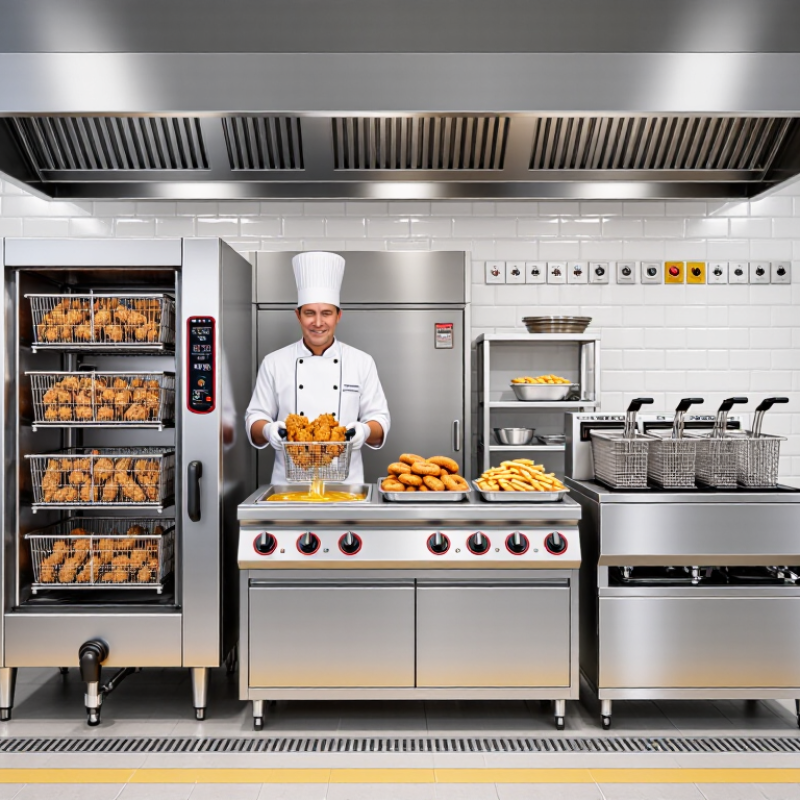
Peak-hour volume should guide your fryer choice, not the busiest day of the year. Count portions sold during your busiest 60 minutes, then multiply by the average raw product weight. For example, 80 portions at 0.25 pounds require 20 lb/h. Add 15–25% capacity for queue surges, basket loading, and recovery time. That brings the practical target near 23–25 lb/h. Leave room.
Rated capacity can be misleading. It may reflect ideal oil temperature, small batches, and carefully timed testing. Real kitchens face frozen products, wet coatings, crowded baskets, and frequent door openings. During equipment evaluations, compare the stated lb/h rating with measured output during a realistic rush. Check recovery after each load, not only the first batch. A fryer that meets demand on paper may slow service when orders arrive together. I have seen this mistake repeatedly.
Tips: Track sales in 15-minute intervals for seven days. Record product weight, batch size, frying time, and recovery time. Use the heaviest regular product in your calculation. If demand varies sharply, consider two smaller fryers instead of one oversized unit. This can improve flexibility, but it may increase cleaning and electrical requirements. Confirm available power before ordering. A spreadsheet helps, though staff observations often reveal the real bottleneck.
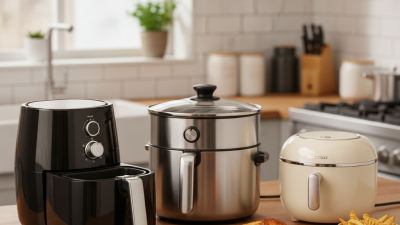
Tank size affects both output and daily handling. A larger tank can support busy lunch periods, but it may consume more energy during idle hours. Smaller tanks heat faster in some kitchens and simplify oil changes. Measure your busiest service window, not an average day. That detail is often overlooked.
Under ASTM F1361, compare recovery time after a controlled food load. Recovery shows how quickly the oil returns to cooking temperature. A fryer with strong recovery can produce steadier texture during repeated batches. However, recovery data needs context. Check the test load, starting temperature, oil volume, and measurement method. Otherwise, the numbers may look impressive but mean little.
Efficiency should include cooking energy and standby performance. Review energy use alongside tank capacity and hourly output. A unit using less power may still struggle if recovery is slow. Ask for documented test results and the exact ASTM F1361 edition used. Confirm that the published figures match your operating voltage and installation conditions. Real kitchens are messier than laboratories. Staff habits, basket loading, ventilation, and oil filtration can change results. I would test a shortlisted fryer with your actual portions before purchasing. That step costs time, but it can expose a poor fit. Bigger is not automatically better.
Choosing an electric fryer starts with its kW demand, not its basket size. A unit with high power may recover heat quickly, but it can strain your kitchen’s electrical capacity. Check the required voltage, amperage, and circuit before purchasing. Ask an electrician to confirm the load during peak service.
Idle energy matters between lunch and dinner. Some fryers keep oil hot continuously, even when orders slow. Compare documented idle consumption, measured in kWh, rather than relying on broad efficiency claims. A fryer using less energy while waiting can reduce operating costs across hundreds of quiet hours. Small differences become expensive over time.
ENERGY STAR performance data can support a more reliable comparison. Review cooking efficiency, idle energy, and tested capacity together. A model with excellent cooking efficiency may still waste power during long holding periods. Look for test conditions that resemble your kitchen, including oil volume and batch size. Data is useful, but it is not perfect. Real results change with filter cleaning, thermostat accuracy, and staff habits.
Measure your current fryer for one week. Record start-up time, recovery time, and energy use during idle periods. Then compare those figures with verified product data. A spreadsheet may reveal an uncomfortable detail: the cheapest purchase price is not always the lowest-cost choice.
Choosing the best electric fryer starts with compliance, not cooking speed. Request documentation showing evaluation to UL 197, the safety standard for commercial electric cooking appliances. Check the exact model, voltage, phase, wattage, and listed accessories. A certificate for another configuration is not enough.
NSF/ANSI 4 matters at the food-contact level. It addresses cleanability, construction, and sanitation for commercial cooking equipment. Look for smooth welds, accessible oil-contact areas, and removable parts that staff can wash without awkward tools. ENERGY STAR’s commercial foodservice guidance notes that kitchens can use roughly 2.5 times more energy per square foot than other commercial spaces. Therefore, compare recovery performance and standby consumption, not only the purchase price.
Local electrical rules can change the decision. Ask the authority having jurisdiction about circuit capacity, disconnect placement, grounding, ventilation coordination, and required inspection. NFPA 70, the National Electrical Code, is widely used in the United States, but local amendments still control. Measure the panel before ordering. A fryer may meet UL 197 and NSF/ANSI 4, yet overload an old circuit. That mistake is easy to miss. I would also confirm service clearance with a licensed electrician, because installation drawings sometimes feel clearer than they really are. Use current manufacturer test reports, third-party listings, and written approval records. Verify twice.
Choosing an electric fryer starts with more than its purchase price. Build a five-year cost estimate before comparing models. Include equipment, installation, electricity, cooking oil, cleaning, parts, and service visits.
For example, a fryer costing $1,800 may require $300 for installation. A 12-kilowatt unit running eight hours daily, 300 days yearly, uses about 28,800 kilowatt-hours over five years. At $0.18 per kilowatt-hour, energy costs approximately $5,184. If oil replacement costs $45 weekly, oil adds about $11,250. Allow $500 yearly for filters, thermostats, seals, and inspections. The estimated five-year total becomes $21,034.
Energy matters.
Use your own operating schedule whenever possible. A busy kitchen may recover heat quickly, while a quiet kitchen wastes power during long idle periods. Ask suppliers for measured energy data, not only laboratory ratings. Check oil capacity, recovery time, temperature stability, and cleaning access during a hands-on trial. These details affect both product consistency and labor costs.
Maintenance estimates are imperfect. A neglected drain or damaged heating element can change the budget quickly. I would record daily cooking hours, oil changes, fault calls, and electricity bills for three months before final approval. That record may challenge the original assumptions, but it produces a more credible five-year decision.
This chart compares estimated five-year ownership costs for three commercial electric fryer capacity levels. Energy, oil, and maintenance costs can exceed the initial purchase price, so the lowest upfront cost is not always the most economical choice.
Calculation assumptions: electricity at $0.15 per kWh, 300 operating days per year, 8 operating hours per day, an average 60% heating load, oil replacement every 3 operating days, and routine maintenance based on typical commercial service budgets. Values are planning estimates in USD and exclude taxes, labor, and installation.